



On this page you will find
- Canada’s latest job vacancy figures for September 2026
- Industries recording the strongest growth in vacancies
- Why manufacturing vacancies are rising despite employment losses
- Canadian provinces with growing employment opportunities
- The impact of temporary foreign worker restrictions on recruitment
- Immigration pathways for workers seeking jobs in Canada
- Frequently asked questions
Canada recorded its first monthly increase in job vacancies in nine months in September 2026, with strong annual increases in retail, manufacturing and hospitality pointing to renewed hiring demand.
Statistics Canada reported 528,100 vacant positions nationwide, an increase of 17,300, or 3.4%, compared with August. Job vacancies rose by 35,900, or 7.3%, compared with September 2025.
The figures, released on November 26, come as Canada tightens restrictions on the Temporary Foreign Worker Program and prepares further reforms to international recruitment in 2027.
Manufacturing recorded particularly strong growth in vacancies, reaching its highest level since November 2023 despite a broader decline in labour demand across the industry.
For candidates considering immigration to Canada, the figures highlight sectors and regions where employment opportunities are expanding.
However, increasingly selective immigration policies mean that foreign workers must carefully consider their occupation, qualifications and intended destination.
Canada Records First Monthly Rise In Job Vacancies Since December 2025
September’s figures represent a change in direction for the Canadian labour market following several months of relatively stable vacancy levels.
Statistics Canada also revised its August 2026 figures, putting the number of vacancies that month at approximately 510,800.
Job Vacancies by Month
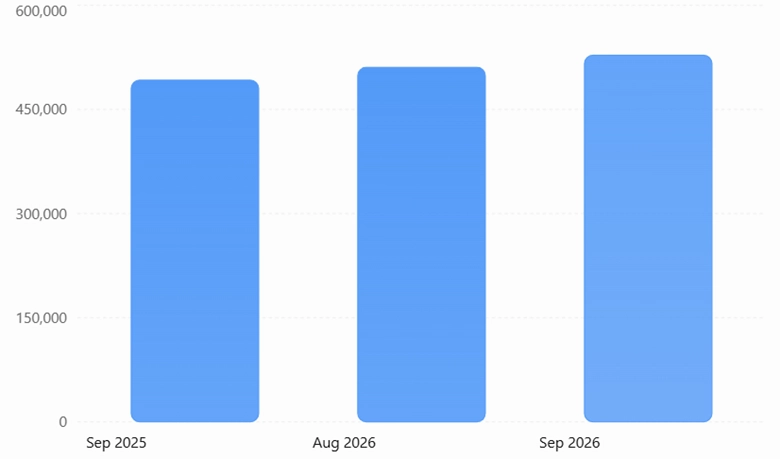
The national job vacancy rate increased to 2.9% after nine consecutive months at 2.8%.
Meanwhile, the number of unemployed people per vacancy fell to 2.8, its lowest level since October 2024. The ratio stood at 2.9 in August 2026 and 3.3 in September 2025.
These figures suggest that employers could face increasing competition for available workers.
However, Canada still has substantially more unemployed people than vacant positions. Differences in qualifications, experience and geographic location can prevent employers from finding suitable candidates despite the availability of workers elsewhere in the economy.
Retail, Manufacturing And Hospitality Drive Annual Vacancy Growth
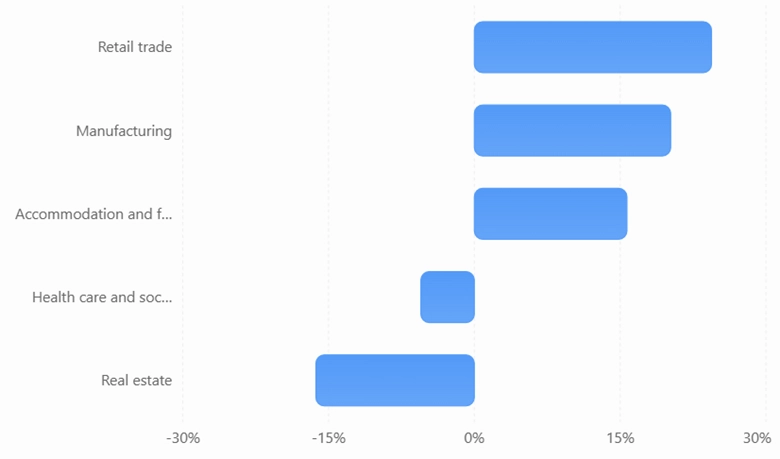
Seven Canadian industries recorded annual increases in vacancies in September 2026.
Retail trade recorded the largest numerical increase, followed by accommodation and food services and manufacturing.
Health care and social assistance and real estate recorded annual declines.
Job Vacancy Change by Industry
The monthly figures also showed increased recruitment demand in administrative and support services and information and cultural industries.
Vacancies in administrative and support, waste management and remediation services reached their highest level since March 2024.
The range of industries recording growth suggests that renewed demand extends beyond traditional immigration priority sectors.
Retail Employers Increase Recruitment
Retail vacancies rose by 24.4% over the previous 12 months, the largest annual numerical increase among Canadian industries.
The sector also recorded an 11% monthly increase in September, reversing a cumulative decline between May and August.
Retail payroll employment increased by 20,900 over the previous year, with food and beverage retailers, general merchandise stores and motor vehicle and parts dealers contributing to growth.
Potential employment opportunities include retail sales supervisors, store managers, sales associates, customer service representatives and inventory management workers.
However, employers seeking to recruit internationally for lower-wage retail positions face significant restrictions under Canada’s foreign worker rules.
Candidates who already hold valid open work permits may have an advantage because employers can generally hire them without obtaining a Labour Market Impact Assessment.
Hospitality Vacancies Rise Nearly 16%
Accommodation and food services recorded an annual increase of 8,700 vacancies, equivalent to 15.7%.
The hospitality industry has historically relied on temporary foreign workers, particularly in tourism-dependent communities where employers can struggle to recruit enough local workers.
Restaurants, hotels and other hospitality businesses could face greater competition for workers as demand increases.
Potential employment opportunities include:
- Chefs and cooks
- Restaurant and food service managers
- Food service supervisors
- Hotel managers
- Housekeeping staff
- Food preparation workers
Many lower-wage hospitality positions face restrictions on international recruitment in metropolitan areas with higher unemployment.
Employers in smaller communities may have greater flexibility, depending on their location and applicable federal and provincial measures.
Manufacturing Vacancies Reach Highest Level In Nearly Three Years
Manufacturing recorded one of the most significant developments in the September report.
Vacancies increased by 20.2% over the previous year, reaching their highest level since November 2023.
The increase came despite a decline in total manufacturing labour demand since November 2023. Statistics Canada measures total labour demand by combining filled and vacant positions.
Manufacturing payroll employment fell by 7,300 in September 2026. Transportation equipment and food manufacturing accounted for some of the largest monthly losses.
Although manufacturing employment remained slightly higher than a year earlier, the sector had lost 26,700 payroll positions compared with its December 2024 peak.
These contrasting trends suggest that recruitment challenges can persist even as an industry experiences employment losses.
Manufacturers may need workers with technical qualifications that differ from those held by recently displaced employees.
Occupations worth investigating for experienced manufacturing workers include:
- Welders
- Industrial mechanics and millwrights
- Machinists
- Industrial electricians
- Manufacturing technicians
- Industrial machinery operators
- Production supervisors
Candidates with relevant qualifications and experience may also qualify for permanent residence through the Federal Skilled Trades Program or provincial immigration streams.
Health Care Vacancies Decline As Employment Expands
Health care and social assistance recorded an annual decline of 5,400 vacancies, or 5.5%.
Despite the decline, health care employers continued to expand their workforces. Payroll employment increased by 66,100, or 2.7%, over the previous year.
Hospitals, residential care facilities, ambulatory health care providers and social assistance organizations all contributed to employment growth.
The figures suggest that the sector is making progress in filling available positions while continuing to recruit additional workers.
Health care remains a federal and provincial immigration priority. Qualified medical professionals and other eligible health care workers can access targeted permanent residence pathways.
Which Canadian Provinces Have The Strongest Job Markets?
Newfoundland and Labrador recorded a significant monthly increase in job vacancies in September, while six other provinces experienced smaller increases.
Ontario recorded the largest numerical gain among the provinces highlighted by Statistics Canada.
| Province | Monthly change in vacancies | Percentage change |
|---|---|---|
| Newfoundland and Labrador | +1,300 | +28.2% |
| Alberta | +4,500 | +6.4% |
| British Columbia | +2,800 | +3.5% |
| Ontario | +5,200 | +3.0% |
Source: Statistics Canada.
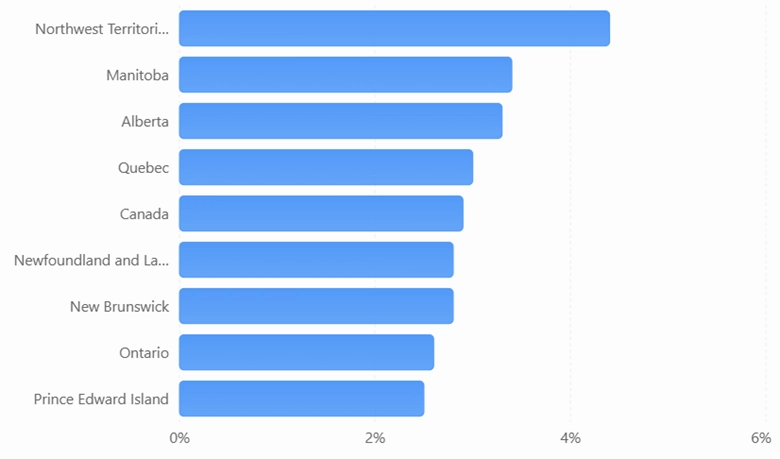
The Northwest Territories recorded the country’s highest job vacancy rate, followed by Manitoba and Alberta.
Manitoba, Alberta and Quebec also recorded annual increases in their vacancy rates.
Job Vacancy Rate By Province
The regional differences highlight the importance of the Provincial Nominee Program, which allows participating provinces and territories to select immigrants according to their economic requirements.
Foreign workers willing to settle outside Canada’s largest cities could find additional employment and permanent residence opportunities.
Rising Vacancies Come As Canada Restricts Foreign Worker Recruitment
The increase in job vacancies comes at a challenging time for businesses that rely on international recruitment.
Canada continues to restrict access to temporary foreign workers as part of its strategy to reduce the temporary resident population to below 5% of the country’s population by the end of 2027.
The federal government refuses to process most low-wage Labour Market Impact Assessment (LMIA) applications in census metropolitan areas with unemployment rates of 6% or higher.
Exemptions apply to certain sectors and occupations, including health care, construction, food processing and eligible childcare positions.
Employers must also meet prevailing wage requirements, demonstrate domestic recruitment efforts and comply with applicable limits on the proportion of temporary foreign workers they employ.
Canada’s 2027–2029 Immigration Levels Plan sets a target of 50,000 new arrivals under the Temporary Foreign Worker Program in 2027.
Continued growth in vacancies could place additional recruitment pressure on employers that have limited access to international workers.
Further LMIA Reforms Proposed For March 2027
The federal government announced changes to the Temporary Foreign Worker Program on November 6, 2026, including an increase in the maximum employment duration supported by low-wage LMIAs from one year to two years.
The government also proposed further regional and occupational restrictions from March 1, 2027.
The proposed framework would more closely align access to foreign workers with local labour market conditions and priority occupations, subject to provincial and territorial participation.
The changes could provide greater flexibility for eligible employers in smaller communities while restricting international recruitment in certain larger urban centres.
Employers should monitor the development of these proposals and review current LMIA requirements before beginning international recruitment.
Immigration Pathways For Workers Seeking Jobs In Canada
Express Entry
Canada’s Express Entry system manages applications under the Federal Skilled Worker Program, Federal Skilled Trades Program and Canadian Experience Class.
Changes that took effect on November 3, 2026, introduced additional opportunities for eligible candidates with qualifying job offers or Canadian work experience in designated high-wage occupations.
Experienced manufacturing workers, technical specialists and other qualified professionals could benefit from these changes.
Provincial Nominee Programs
Provincial immigration programs allow participating provinces and territories to address regional labour market requirements.
Candidates with relevant work experience, qualifying job offers or established connections to a province may qualify for nomination.
Canada has also announced additional nomination space for 2027 to help established temporary workers and their families transition to permanent residence.
Canadian Experience Class
Temporary foreign workers who gain eligible skilled work experience in Canada may qualify for permanent residence through the Canadian Experience Class.
Candidates must meet the program’s work experience, language and other eligibility requirements.
What Canada’s Latest Vacancy Figures Mean For Immigration In 2027
September’s increase in job vacancies provides an early indication that recruitment demand could be recovering after several months of stability.
However, one month of growth does not establish a sustained recovery.
Statistics Canada’s next quarterly vacancy report, due on December 15, will provide more detailed information about occupational demand and offered wages.
The federal government faces the challenge of reducing temporary immigration while ensuring businesses can access workers with essential skills.
For prospective immigrants, targeting occupations and regions with demonstrated labour demand will become increasingly important as Canada introduces more selective immigration policies.
Frequently Asked Questions
How many job vacancies are there in Canada in 2026?
Canada recorded 528,100 job vacancies in September 2026, according to Statistics Canada. Vacancies increased by 3.4% compared with August and 7.3% compared with September 2025. September marked the first monthly increase since December 2025, while the national job vacancy rate increased to 2.9%.
Which Canadian industries have the fastest-growing job vacancies?
Retail trade, accommodation and food services, and manufacturing recorded the largest numerical annual increases in job vacancies in September 2026. Retail vacancies increased by 24.4%, manufacturing vacancies rose by 20.2%, and accommodation and food services recorded growth of 15.7%. Individual employment opportunities depend on qualifications, experience and location.
Which Canadian provinces have the highest job vacancy rates?
The Northwest Territories recorded Canada’s highest vacancy rate in September 2026 at 4.4%, followed by Manitoba at 3.4% and Alberta at 3.3%. Ontario, Alberta and British Columbia also recorded modest monthly increases in vacancies, while Newfoundland and Labrador experienced a significant increase of 28.2%.
Can Canadian employers still hire temporary foreign workers in 2027?
Canadian employers can continue hiring temporary foreign workers if they meet applicable program requirements. However, the government has proposed additional regional and occupational restrictions from March 2027. Employers should check prevailing wages, domestic recruitment requirements, workforce limits and location-specific restrictions before submitting Labour Market Impact Assessment applications.
Can manufacturing workers qualify for Canadian permanent residence?
Manufacturing workers may qualify for permanent residence through Express Entry, the Federal Skilled Trades Program or Provincial Nominee Programs. Eligibility depends on occupation, work experience, language ability and other program requirements. Candidates in designated high-wage occupations may also benefit from Express Entry changes introduced in November 2026.