


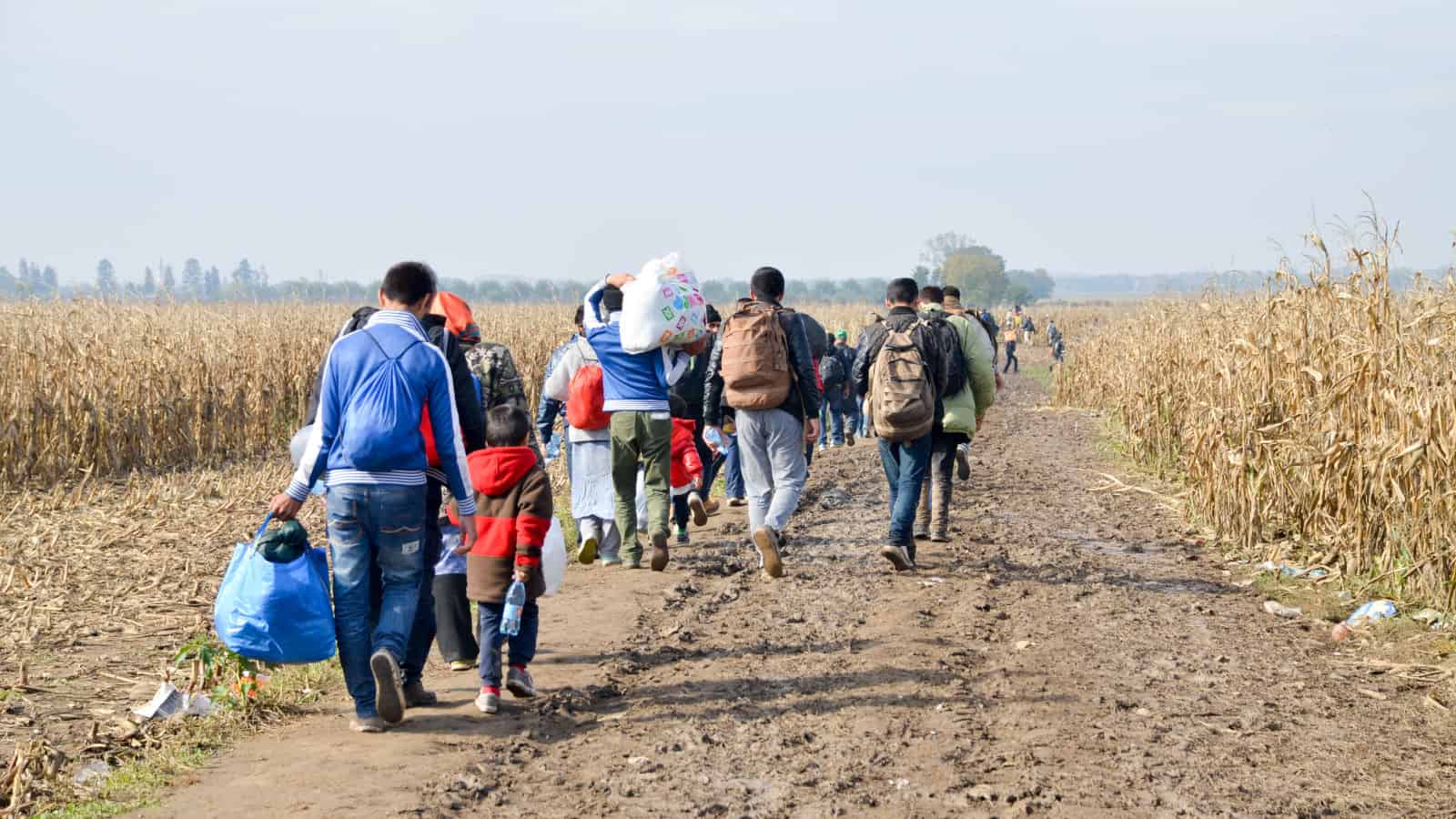
Canada operates two separate refugee systems. One decides claims made by people who are already in Canada or who arrive at a port of entry. The other resettles refugees who are outside Canada and who have been referred for protection.
On This Page, You Will Find:
- How Canada’s refugee system is structured
- The new asylum eligibility bars introduced by Bill C-12
- How the Safe Third Country Agreement applies
- How an in-Canada asylum claim is made and decided
- Resettlement from outside Canada: GAR, PSR and BVOR
- What happened to the Economic Mobility Pathways Pilot
- Refugee and protected person targets in the 2026-2028 Immigration Levels Plan
- Frequently asked questions
Both systems changed substantially in 2025 and 2026. New eligibility bars now block a large share of in-Canada claims from reaching the Immigration and Refugee Board of Canada (IRB), and one economic pathway for displaced people has closed.
This page is general information, not legal advice. Refugee law is complex, the consequences of a refused claim are serious, and rules have changed recently. Anyone making or considering a claim should seek advice from a qualified lawyer or an authorised immigration consultant, or from a legal aid clinic in their province.
What Refugee Protection Means in Canada
Refugee protection is available to people who cannot return to their home country because of a well-founded fear of persecution based on race, religion, political opinion, nationality or membership in a particular social group, or who face a risk of torture, a risk to life, or a risk of cruel and unusual treatment or punishment.
IRCC is explicit that claiming asylum is not a route to immigrate to Canada or to extend a stay. If Canada decides a person does not need protection, that person must leave. Returning voluntarily to the country of alleged persecution can result in a claim being rejected or in the loss of protected person status.
People who do not meet the refugee definition may still have other options, including regular Canadian immigration programs or family sponsorship, though these are entirely separate processes with their own requirements.
Related news
- Ontario Launches New Workforce Priority Stream In Major OINP Redesign
- IRCC Sets New Processing Targets as Bill C-3 Expands Citizenship-By-Descent Claims
- British Columbia Issues 410 High Economic Impact Invitations Under BC PNP
New Asylum Eligibility Rules Under Bill C-12
Bill C-12, the Strengthening Canada’s Immigration System and Borders Act, received royal assent on 26 March 2026. It changed the asylum system in four areas: eligibility, process modernisation, domestic information sharing, and government authority over immigration documents and applications.
Two eligibility bars are now in force. They apply to all claims made on or after 3 June 2025:
- The one-year bar. A claim made more than one year after a person’s first entry into Canada after 24 June 2020 will not be referred to the IRB. This applies regardless of whether the person left Canada and returned, and it applies to workers, students and visitors.
- The 14-day bar. A claim from a person who entered Canada between ports of entry along the Canada-US land border, and who claims more than 14 days after entry, will not be referred to the IRB.
IRCC says the measures are intended to reduce pressure on the asylum system and deter its use as a shortcut to other immigration pathways.
Two safeguards accompany the bars. Officers are given guidance to consider the individual circumstances of unaccompanied minors, who lack legal guardianship. And in most cases, people caught by the new rules retain access to a pre-removal risk assessment (PRRA), which is intended to prevent removal to a country where the person would face persecution, torture or other serious harm. A PRRA application filed within the regulatory timelines stays removal until IRCC decides it.
On 19 June 2026 the government published proposed regulations to implement the rest of the reforms, with a 30-day consultation and implementation anticipated later in 2026. The proposals would clarify the application process, set timelines for government review, define rules for reinstating withdrawn claims, strengthen support for vulnerable claimants, help eligible claimants get work permits sooner, and create exceptions to the new ineligibility rules.
Because those regulations were still in consultation as of September 2026, claimants should check the current rules before acting on anything in this section.
The Safe Third Country Agreement
The Safe Third Country Agreement (STCA) between Canada and the United States remains in effect, and Bill C-12 did not change how it applies.
Under the agreement, refugee claimants must request protection in the first safe country they arrive in. The United States is the only country Canada has designated as a safe third country.
Since the Additional Protocol took effect on 25 March 2023, the agreement covers the entire Canada-US land border, including internal waterways. It applies:
- at land border crossings
- to people who cross between ports of entry and claim less than 14 days after entry
- to claims made by train
- at airports, but only where the person has been refused refugee status in the US and is in transit through Canada after being deported from the US
People affected are returned to the US unless they qualify for an exception. There are four categories of exception: family member exceptions, an unaccompanied minors exception, document holder exceptions, and public interest exceptions. The agreement does not apply to US citizens, or to stateless habitual residents of the US.
Meeting an STCA exception does not by itself make a claim eligible. All other eligibility criteria still apply, including inadmissibility for security, human or international rights violations, or serious criminality.
How an In-Canada Asylum Claim Works
A claim can be made from inside Canada or at a port of entry, which includes an airport, seaport or land border and is treated as being located in Canada.
The process runs in stages:
- Eligibility. An officer decides whether the claim can be referred to the IRB. A claim is ineligible if the person already has protected status, is subject to a removal order, has made a previous claim that was rejected, abandoned or withdrawn, is caught by the STCA, or falls under one of the new Bill C-12 bars.
- Referral. Eligible claims are referred to the Refugee Protection Division of the IRB, an independent tribunal.
- Hearing. The IRB decides whether the claimant is a Convention refugee or a person in need of protection, based on the evidence presented.
- Outcome. Accepted claimants become protected persons and can apply for permanent residence. Refused claimants may have access to an appeal to the Refugee Appeal Division or to judicial review, and otherwise must leave Canada.
Claim volumes have fallen sharply. IRCC reported that from January to April 2026, 42 per cent fewer people submitted an asylum claim in Canada than in the same period of 2025, and 63 per cent fewer than in the same period of 2024.
Even so, the IRB’s caseload remains well above its funded capacity, and waits for a hearing are measured in months rather than weeks. Current processing times should be checked directly with the IRB and IRCC.
Resettlement From Outside Canada
People outside Canada cannot apply directly for resettlement. They must be referred by the United Nations Refugee Agency (UNHCR), a designated referral organisation, or a private sponsorship group.
Two classes exist:
- Convention refugee abroad class – people outside their home country who cannot return because of a well-founded fear of persecution.
- Country of asylum class – people outside their home country or country of habitual residence who have been seriously affected by civil war or armed conflict, or denied basic human rights on an ongoing basis. This class is privately sponsored.
Applicants must pass medical, security and criminality checks. Quebec selects its own resettled refugees under separate provincial procedures.
Three resettlement routes operate:
- Government-Assisted Refugees (GAR). Referred by UNHCR or another referral body and supported by the federal government, or by Quebec, for up to one year or until self-sufficiency. Federal targets include streams for human rights defenders and LGBTQI+ individuals.
- Privately Sponsored Refugees (PSR). Canadian groups provide housing, financial and emotional support for one year. Sponsors include Sponsorship Agreement Holders, Groups of Five and Community Sponsors. Sponsors cannot ask the refugee to repay the cost of sponsorship, and refugees should not be asked to pay toward the processing of their application.
- Blended Visa Office-Referred (BVOR). Matches private sponsors with refugees already identified by referral organisations, with financial support split between the sponsor and the federal government.
The Economic Mobility Pathways Pilot Has Closed
The Economic Mobility Pathways Pilot (EMPP), which allowed skilled refugees and other displaced people to immigrate through economic programs rather than resettlement, is closed to new applications.
Applications already submitted continue to be processed, and EMPP admissions still appear inside the federal economic pilots line of the current levels plan for that reason. Skilled displaced people who would previously have used the EMPP now need to qualify under standard economic programs such as Express Entry or a provincial nominee program, on the same terms as any other applicant.
Refugee Targets in the 2026-2028 Levels Plan
The 2026-2028 Immigration Levels Plan sets overall permanent resident admissions at 380,000 a year. Refugees and protected persons account for 13 per cent of admissions.
The 2026 targets for the category are:
- Protected persons in Canada and dependants abroad – 20,000 (range 17,000 to 30,000)
- Government-assisted refugees – 13,250 (range 10,000 to 15,500)
- Privately sponsored refugees – 16,000 (range 13,000 to 19,000)
- Blended Visa Office-Referred refugees – 50 (range up to 100)
- Total refugees and protected persons – 49,300 (range 42,000 to 55,000)
Separately, a one-time two-year initiative will process roughly 115,000 protected persons already in Canada who are on a pathway to permanent residence. Those admissions are in addition to the targets above.
Humanitarian and compassionate admissions are targeted at 1,100 in 2026, with a further 5,800 under an “Other” category that includes Canada’s responses to the situations in Ukraine, Sudan and Hong Kong.
Frequently Asked Questions
Can I still claim asylum in Canada if I have been here more than a year?
In most cases, no. Under Bill C-12, a claim made more than one year after a person’s first entry into Canada after 24 June 2020 will not be referred to the Immigration and Refugee Board, and this applies to workers, students and visitors. Affected people usually retain access to a pre-removal risk assessment. Anyone in this situation should get qualified legal advice before acting.
Does the Safe Third Country Agreement still apply in 2026?
Yes. The Safe Third Country Agreement and its Additional Protocol remain in effect across the entire Canada-US land border, including internal waterways. People who claim at a land border crossing, or within 14 days of an irregular crossing, are returned to the United States unless they meet a family member, unaccompanied minor, document holder or public interest exception.
What is the 14-day rule for claims made between ports of entry?
Someone who enters Canada between official ports of entry along the Canada-US land border and waits more than 14 days to claim asylum will not have their claim referred to the Immigration and Refugee Board. Someone who claims within 14 days is instead assessed under the Safe Third Country Agreement, which generally means return to the United States unless an exception applies.
Can I apply directly to Canada to be resettled as a refugee?
No. Resettlement from outside Canada requires a referral from the United Nations Refugee Agency, a designated referral organisation, or a private sponsorship group. Self-applications are not accepted. Anyone asking for payment in exchange for a referral or for faster processing should be treated as a fraud risk.
Is the Economic Mobility Pathways Pilot still accepting applications?
No. The EMPP is closed to new applications, although applications already in the system continue to be processed. Skilled refugees and displaced people can still apply through Canada’s regular economic immigration programs if they meet the standard eligibility requirements.
How many refugees will Canada admit in 2026?
The 2026-2028 Immigration Levels Plan targets 49,300 admissions in the refugees and protected persons category for 2026, including 13,250 government-assisted refugees and 16,000 privately sponsored refugees. A separate one-time initiative will process about 115,000 protected persons already in Canada over two years, in addition to those targets.