



On This Page, You Will Find:
- How IRCC begins processing a work permit application
- Biometrics: fees, the two-week deadline and validity
- Medical exams and police certificates
- Requests for more documents and interviews
- Processing times and how they are counted
- If you applied from outside Canada: the port of entry letter of introduction
- If you applied from inside Canada: maintained status and working while you wait
- Receiving your permit and the conditions printed on it
- What a refusal means
- Frequently asked questions
Once a Canada work permit application is submitted, what happens next depends mainly on where you applied from – outside Canada, inside Canada, or at a port of entry.
Immigration, Refugees and Citizenship Canada (IRCC) starts by checking that the application is complete. From there the file moves through biometrics, any medical or police requirements, an eligibility and admissibility assessment, and finally a decision letter in your online account.
The single most useful thing an applicant can do after submitting is monitor the account and respond quickly. Missing documents and slow responses are the most common reason a file takes longer than the published processing time.
How IRCC Processes Your Application
An officer checks that every required document is present. An incomplete application may be refused outright rather than held open.
The officer then verifies that you qualify for the work permit you applied for, and checks the employer against IRCC’s public list of employers who have failed to comply with the conditions of hiring foreign workers. An employer on that list cannot hire you.
During the assessment IRCC may ask you to attend an interview, obtain a medical exam, provide a police certificate, or send further information. These requests arrive through your IRCC secure account, so check it regularly.
Biometrics
Most temporary residence applicants must give fingerprints and a photo. The fee is $85 for an individual, or up to $170 for a family applying together.
After you apply, IRCC issues a biometric instruction letter. Book the appointment as soon as it arrives. If you are applying under the Global Skills Strategy, biometrics must be given within two weeks of the letter or the application loses its place in the faster stream.
Two points are frequently overlooked:
- IRCC cannot issue a work permit valid beyond the expiry of your biometrics. If yours expire soon, it is usually worth paying the fee and giving them again.
- If you gave only partial biometrics previously, or a permanent residence application was refused, you may need to give them again even if they appear valid.
If you are applying at a port of entry, biometrics are collected by the border officer – but only at certain ports, so check the location before travelling.

Medical Exams and Police Certificates
Not every work permit applicant needs a medical exam. It depends on where you have lived and the type of work you will do; jobs in health care, child care and some teaching roles routinely require one.
If a medical is required, you can either wait for IRCC’s instructions or complete an upfront medical before you apply. Upfront exams are strongly preferable. Waiting for instructions mid-process can add months, and an application under the Global Skills Strategy is only considered complete if the upfront results are included.
Police certificates are set by the visa office responsible for your country of residence rather than by a single national rule. Your personalised document checklist will list what is needed.
Processing Times
IRCC publishes processing times by application type and country on its online tool, and they are updated regularly. Times are not a service guarantee – they reflect how long it recently took to finish similar applications.
The clock starts the day IRCC receives a complete application and ends when a decision is made. The time you take to give biometrics counts towards it, which is why delaying an appointment directly delays the decision.
Faster processing exists for some applicants. IRCC aims to decide complete Global Skills Strategy and Global Talent Stream applications within two weeks, though it currently warns that files will probably take longer than that. Separate priority processing applies to certain health-care and agriculture occupations, and to provincial nominees in three specialist medical occupations.
Contacting IRCC does not speed up processing. The department contacts you only if documents are missing or when a decision has been made.

If You Applied From Outside Canada
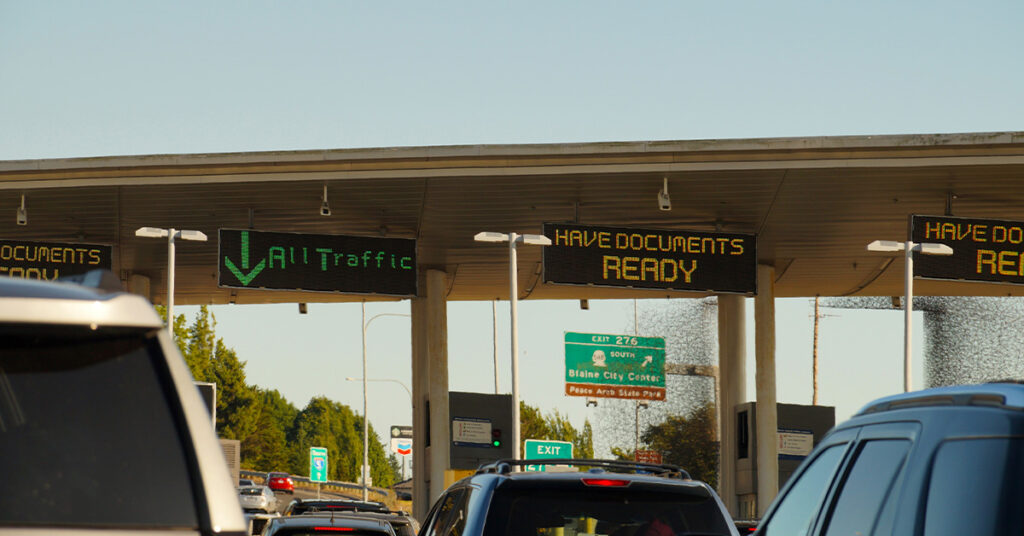
An approval from outside Canada does not arrive as a work permit. You receive a port of entry (POE) letter of introduction, which confirms you have been approved but is not itself a permit. You cannot start working on the strength of it.
You must travel to Canada and present the letter, along with your passport and supporting documents, to a border officer. The officer confirms your admissibility and issues the actual work permit at the port of entry.
If you were already in Canada when the letter was issued, you have to leave and re-enter to activate the permit. Since December 2024 you cannot do this by “flagpoling” – leaving briefly and returning from the United States or Saint-Pierre-et-Miquelon no longer works for work and study permits. Plan a genuine departure and return through an appropriate port of entry.
You also do not need to apply separately for a visitor visa or electronic travel authorization if one is required. IRCC issues it with the work permit decision.
If You Applied From Inside Canada
In-Canada applications are assessed the same way, but the status rules matter more.
If you applied for a new work permit before your existing permit expired, you keep maintained status – the term that replaced “implied status” – and can remain in Canada legally until a decision is made. You must stay in Canada to benefit from it.
What you may do while waiting depends on what you applied for:
- Extending the same work permit: you can keep working without a permit until a decision, under exactly the same conditions – same employer, same job, same work location if you hold an employer-specific permit.
- Changing employer or job: you keep working for the employer named on your original permit. You cannot start the new job until approval, unless you request and receive interim authorisation to work.
- Applying for a study permit or a visitor record: you must stop working when your work permit expires. Maintained status does not carry work authorisation in those cases.
- Temporary resident permit applicants: do not benefit from maintained status at all.
Leaving Canada while on maintained status is risky. If you go abroad as a worker on maintained status, you lose the ability to work on your return until the new permit is approved.
Two practical consequences: provinces generally will not renew a driver’s licence or health card while you are on maintained status, so renew before your permit expires. Your social insurance number expires with your permit, but you may keep working with an expired SIN until a decision is made – you can only update it once the new permit is in hand.
Our guide to extending or changing a Canadian work permit covers the application itself in more detail.
Approval, Issuance and Conditions
If an in-Canada application is approved, IRCC sends a decision letter to your secure account. You can start working as soon as you receive that letter – you do not have to wait for the printed permit.
The permit itself is mailed to the Canadian address on file. It should arrive within six weeks of the decision letter. Update your mailing address through IRCC’s change of address service if it changes before the decision, and contact IRCC if the permit has not arrived after six weeks.
Whether it is issued by mail or at the border, the permit sets out the type of work you may do, the employer you may work for, where you may work, how long the permit is valid and how long you may stay. It cannot be valid beyond the expiry of your passport or your biometrics.
If a medical condition is printed on the permit, an upfront medical exam presented on arrival will usually prevent it. If the permit has already been issued, it may still be possible to have the condition removed.
Check the permit carefully before leaving the border officer. Errors are far easier to fix on the spot.
If Your Application Is Refused
IRCC lists the common grounds, which include failing to meet the requirements for the permit type applied for, inadmissibility, an incomplete application, insufficient funds, a job offer that is not genuine, thin evidence of the required skills or education, untruthful answers, breaching conditions on a previous permit, and staying beyond an authorised period.
You can usually apply again, unless the decision letter says otherwise. Reapplying only makes sense if you can add something the first application lacked.
For a refresher on the application itself, see how to apply for a Canadian temporary work permit and our Canada work permit overview.
Frequently Asked Questions
How long does a Canada work permit take after submission?
It depends on the permit type and where you applied from, and IRCC’s published times are updated regularly. Processing starts once a complete application is received and includes the time taken to give biometrics. Global Skills Strategy applicants have a two-week target, though IRCC currently warns that files will probably take longer.
Can I work while waiting for a decision inside Canada?
If you applied to extend your work permit before it expired, yes – you have maintained status and may keep working under the same conditions until a decision. If you applied to change employer or job, you must keep working for the original employer until approval, unless you obtain interim authorisation.
What is a port of entry letter of introduction?
It is the approval letter issued when a work permit application is approved from outside Canada. It is not a work permit and does not authorise work. You present it to a border officer, who issues the actual permit when you enter Canada.
Do I need a medical exam for a work permit?
Only some applicants do, depending on where they have lived and the work they will perform. If one is required, an upfront exam completed before applying avoids months of delay and is mandatory for a complete Global Skills Strategy application.
What does a work permit cost?
The work permit processing fee is $155. An open work permit adds a $100 holder fee. Biometrics cost $85 for an individual or up to $170 for an eligible family.
When will my printed work permit arrive?
If you applied inside Canada and were approved, IRCC mails the permit to your Canadian address and it should arrive within six weeks of the decision letter. You may start working from the date of the decision letter. If it has not arrived after six weeks, contact IRCC.