


On this page, you will find:
- Citizenship by descent: Removal of the first-generation limit
- Eligibility Criteria: Key requirements for applying for Canadian citizenship.
- Required Documents: A checklist of documents needed for your application.
- Step-by-Step Guide: Detailed instructions on completing and submitting your application.
- Citizenship Application Tracker: How to monitor your application status.
- Citizenship Test Preparation: What to expect and how to study.
- Oath of Citizenship Ceremony: Final steps to become a Canadian citizen.
- FAQs and Tips: Common questions answered and advice for a smooth process.
Becoming a Canadian citizen is an exciting step that brings numerous benefits, including the right to vote, access to all government jobs, and a Canadian passport. This guide will walk you through the citizenship application process, eligibility requirements, and how to track your application effectively.
Important Update for 2026: New Rules for Canadian Citizenship by Descent (Bill C-3)
Major legislative changes have officially ended the “first-generation limit” for passing on Canadian citizenship. Under Bill C-3, individuals born outside of Canada to a Canadian parent before December 15, 2025, are now automatically considered Canadian citizens, regardless of whether they were in the second or subsequent generation born abroad. This landmark reform restores status to thousands of “Lost Canadians” and ensures that citizenship is no longer restricted by a strict generational cutoff.
To understand the full implications of these changes and how they may apply to your specific family history, please read our comprehensive guide: Claiming Canadian Citizenship by Descent Under Canada’s New Citizenship Act (Bill C-3).
Expert Legal Guidance
Navigating the new documentation requirements for a “Substantial Connection” or applying for a Citizenship Certificate can be complex. Book a virtual consultation with Attorney Colin R. Singer, a leading expert in Canadian immigration law with over 35 years of experience, to ensure your application is handled with the highest level of professional oversight and to avoid costly mistakes.
Book a Consultation and Get Expert Help
Step 1: Ensure You Meet the Eligibility Criteria
Before you begin the citizenship application process, ensure you meet these requirements:
- Permanent Residency You must hold permanent resident (PR) status in Canada and have no unfulfilled conditions on your PR status.
- Physical Presence in Canada Applicants must have been physically present in Canada for at least 1,095 days (three years) in the past five years before applying. Use the Physical Presence Calculator provided by Immigration, Refugees, and Citizenship Canada (IRCC) to ensure accuracy.
- Income Tax Filing You must have filed taxes for at least three years within the five-year eligibility period.
- Language Proficiency If you are between 18 and 54 years old, you need to demonstrate proficiency in either English or French. This can be proven through tests, educational certificates, or other official documentation.
- Knowledge of Canada Applicants must pass a citizenship test on Canada’s history, geography, political system, and rights and responsibilities.
Step 2: Gather the Required Documents
To submit your application, you will need:
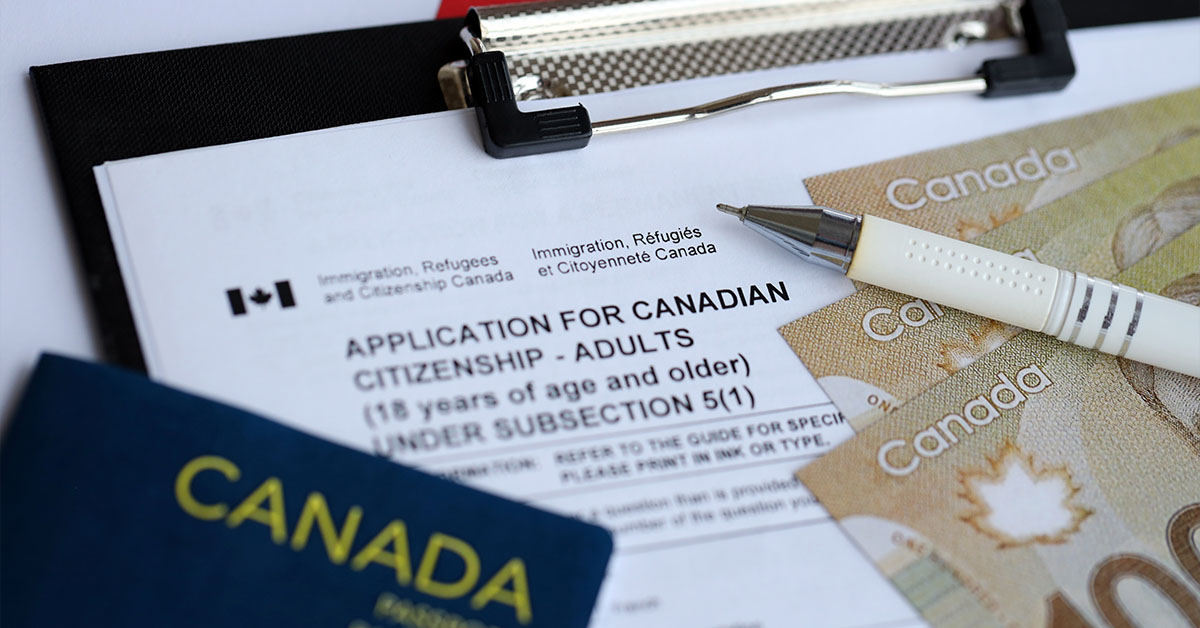
- Application Form (CIT 0002 for adults or CIT 0003 for minors).
- Proof of Permanent Residency (e.g., PR card or record of landing).
- Identification Documents (e.g., passport, travel documents).
- Language Proof (if required).
- Fee Payment Receipt (CAD $653 for adults, CAD $100 for minors).
- Photographs that meet the IRCC’s specifications.
Ensure all documents are clear, complete, and translated into English or French if necessary.
Book a Consultation with our team of experts for help with your application
Step 3: Complete and Submit the Application
- Download the Application Package Access the citizenship application form and guide from the IRCC website.
- Fill Out the Forms Accurately Double-check every detail to avoid errors that could delay your processing.
- Pay the Fees Online Use the IRCC portal to pay the required fees. Save the receipt as you’ll need to include it with your application.
- Submit Your Application Mail your completed application package to the appropriate IRCC office. Ensure it is sent to the correct address listed in the instruction guide.
Step 4: Track Your Citizenship Application
Once you’ve submitted your application, you can track its progress using the citizenship application tracker. Here’s how:
- Visit the IRCC application status tracker.
- Log in using your unique client identifier (UCI) and other personal details.
- Regularly check for updates, such as application completeness, scheduled tests, or interview dates.
The tracker provides transparency and keeps you informed about your application’s status.
Step 5: Prepare for the Citizenship Test
If you are between 18 and 54, you will need to pass a citizenship test. Here’s what to expect:
- Format: The test consists of 20 multiple-choice questions about Canada’s history, geography, political system, and symbols.
- Duration: You have 30 minutes to complete it.
- Passing Score: You need at least 15 correct answers to pass.
IRCC will notify you of the test schedule through email or regular mail. Prepare by studying the official citizenship guide, “Discover Canada: The Rights and Responsibilities of Citizenship.”
Step 6: Attend the Citizenship Interview
After the test, you may need to attend an interview with an IRCC officer. During the interview, the officer will:
- Verify your documents.
- Confirm your knowledge of Canada and language skills (if applicable).
- Discuss your physical presence in Canada and overall eligibility.
Ensure you bring all requested documents and be honest during the interview.
Step 7: Take the Oath of Citizenship
The final step in the process is the citizenship ceremony, where you take the Oath of Citizenship. You will:
- Receive a notice with the date, time, and location of your ceremony.
- Attend either an in-person or virtual ceremony, depending on IRCC’s arrangements.
- Take the oath, receive your citizenship certificate, and officially become a Canadian citizen.
Frequently Asked Questions
Who is eligible to apply for Canadian citizenship?
To apply for Canadian citizenship, you must be a permanent resident, have been physically present in Canada for at least 1,095 days during the five years before applying, have filed Canadian income taxes if required, meet the language requirement if you are aged 18 to 54, and pass the citizenship test unless you are exempt.
How many days do I need to live in Canada before applying for citizenship?
Most applicants must have been physically present in Canada for at least 1,095 days during the five years immediately before submitting their application. Time spent in Canada before becoming a permanent resident may count in some circumstances, but only up to the limits set by Immigration, Refugees and Citizenship Canada.
How much does it cost to apply for Canadian citizenship?
The application fee for adults is CAD $653, which includes the processing fee and the right of citizenship fee. Minors under 18 generally pay CAD $100. Fees must be paid online before you submit your application.
How difficult is the Canadian citizenship test?
The citizenship test contains 20 multiple-choice and true-or-false questions covering Canada’s history, geography, political system, symbols, and the rights and responsibilities of citizenship. Applicants aged 18 to 54 generally need at least 15 correct answers to pass. Studying the official Discover Canada guide is the best way to prepare.
Can I travel outside Canada while my citizenship application is being processed?
Yes. You can travel while your application is being processed, provided you continue to meet all eligibility requirements and attend any scheduled citizenship tests, interviews or ceremonies. If you are travelling, ensure you have valid travel documents and notify IRCC if your contact details change.
How long does it take to become a Canadian citizen?
Processing times vary depending on application volumes and individual circumstances. Most applications are processed within the timelines published by IRCC, although additional document requests, interviews or security checks can extend the process. You can monitor your application’s progress using the IRCC citizenship application tracker.
What happens if I fail the citizenship test?
If you do not pass the citizenship test on your first attempt, IRCC will normally give you another opportunity to take it. Applicants who do not pass after the permitted attempts may be invited to attend an interview with a citizenship officer, who will assess their knowledge of Canada and determine whether they meet the citizenship requirements.
Does Bill C-3 affect my eligibility for Canadian citizenship?
Bill C-3 removes the first-generation limit for many people born outside Canada to Canadian parents, restoring citizenship to thousands of individuals previously excluded by the old rules. If you believe you may qualify through a Canadian parent or grandparent, you should review the new legislation carefully before submitting an application.