


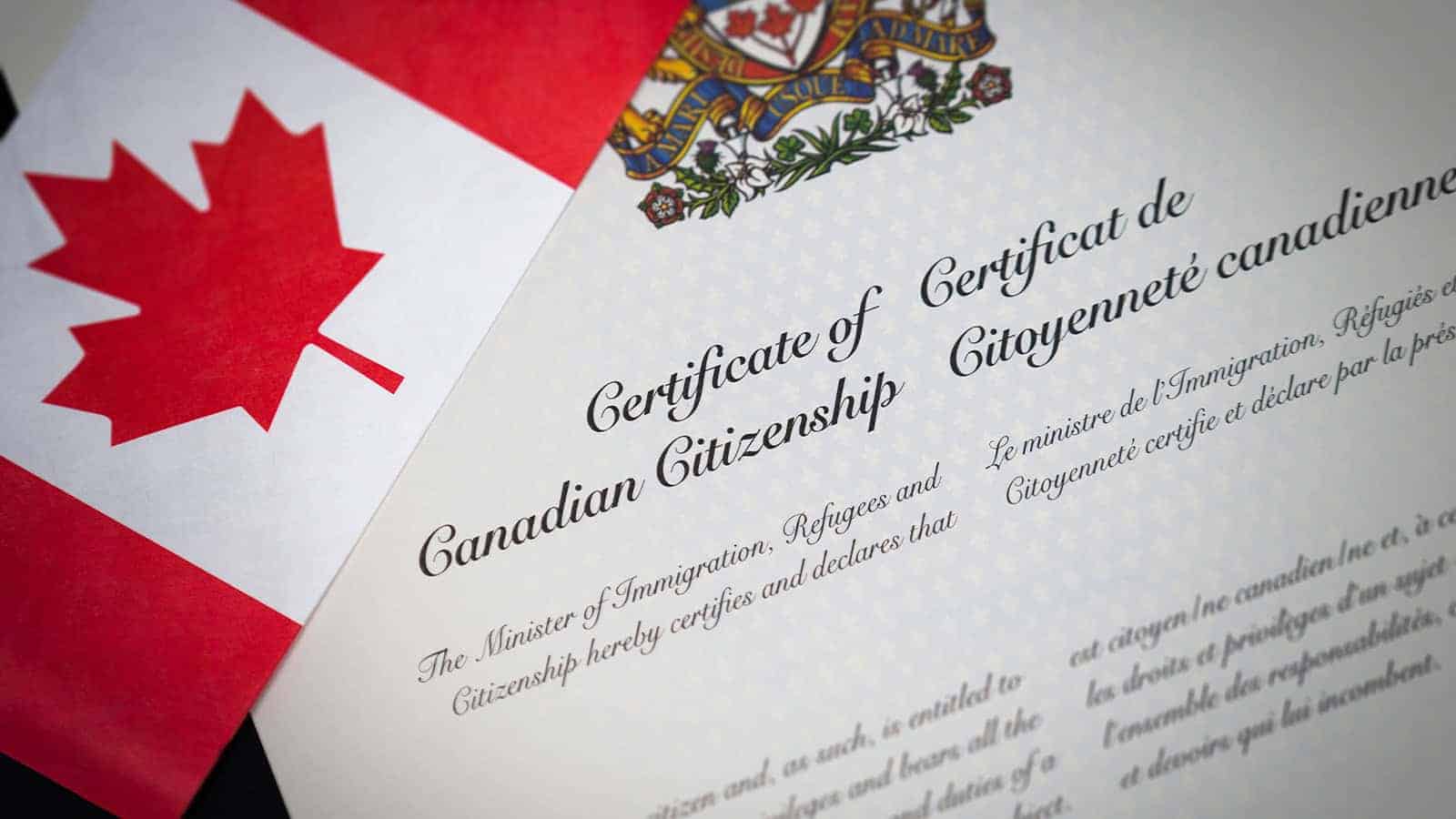
In one of the fastest reversals in recent memory, Immigration, Refugees and Citizenship Canada (IRCC) has begun walking back the “surrender letters” it sent to Lost Canadians days earlier — telling many of the people ordered to hand back their Bill C-3 citizenship certificates that they can keep them after all.
Less than a week after the Registrar of Canadian Citizenship directed flagged holders to return their certificates, IRCC started issuing “revalidation letters” confirming the documents remain active. For families who feared their newly recognized Canadian citizenship by descent was about to be stripped away, the reversal is welcome relief — but it raises hard questions about how the original demand was issued at all.
On This Page You Will Find
- What the revalidation letters say and why the certificates are now active again
- How many people are affected and what happens to new applications
- Why it happened and who is asking
- What this means for applicants
- Frequently asked questions
What the Revalidation Letters Say
The revalidation letters, dated June 19, 2026 and signed by Registrar Peggy Sun — the same official who signed the surrender notices — tell recipients that the review of their proof-of-citizenship file is complete, that the evidence supports the claim, and that the certificate “shall not be cancelled,” citing subsection 26(4) of the Citizenship Regulations. IRCC’s systems now show the certificates as active, and the department says no further action is required.
Tellingly, several recipients say they submitted no new evidence between the two letters. The same documents IRCC flagged as deficient were, on a second look, found sufficient.
Main Guide
How to Claim Canadian Citizenship by Descent Under Canada’s New Citizenship Act Bill C-3
Read our comprehensive guide to Bill C-3 and Canadian citizenship by descent for all applicants worldwide.
How Many People — and What Happens to New Applications
IRCC says the surrender letters went to only “a few dozen” people, while the roughly 4,100 citizenship by descent claims approved under Bill C-3 — about half from applicants born in the United States — are now under broader review. Certificates won’t be suspended unless that review turns up a problem with a document already on file.
Two pressures remain. The department has temporarily paused finalizing new Bill C-3 citizenship certificates, leaving fresh applicants in limbo. And holders placed under review were told their Canadian passports are invalid and must be returned within 15 days, with passport eligibility reassessed only if their claim is confirmed.\
Related news
- Canada Expands Work Permit Pathway For Quebec Skilled Workers And Their Spouses
- What Qualifies as Significant Benefit to Canada Under International Mobility Program?
- Unpacking Ontario’s Plan To Overhaul The OINP
Why It Happened — and Who Is Asking
Even now, the trigger is unclear. Immigration Minister Lena Metlege Diab said she ordered her department to investigate after learning “something” had happened, and IRCC has confirmed it is reviewing how the recall came about — an internal probe that remains open.
The minister has defended the documentary bar: “Canadian ancestry does not guarantee Canadian citizenship… Genealogy websites are not enough.” Critics counter that the goalposts moved after the fact. NDP immigration critic Jenny Kwan wants Diab to explain the about-face, arguing that any concerns about supporting documents should have been resolved before the certificates were ever issued.
What This Means for Applicants
Bill C-3 remains in force and the eligibility rules are unchanged. What has shifted is the documentary standard — including an explicit expectation that applicants show the efforts they made to obtain properly sourced records.
The most telling fact of the whole episode is that many files were “fixed” without a single new document. The dispute was never really about whether these people are Canadian; it was about how their entitlement was documented on the page. That is precisely where preparation makes the difference. Many of those caught in the first wave were self-represented applicants who had bridged multi-generational gaps with historical records that lacked the sourcing and written explanations IRCC’s own checklist contemplates.
An application built to that standard from the outset is far less likely to be flagged — and far easier to defend if it is. Counsel experienced in the Bill C-3 framework can assemble a file that holds up the first time and respond precisely to the gap a surrender letter identifies, rather than scrambling to interpret an unfamiliar regulation under a tight deadline. The lesson of June 2026 is simple: get it right before you file.
Update: IRCC completes comprehensive review of citizenship certificates issued under C-3
Immigration, Refugees and Citizenship Canada (IRCC) has issued a statement addressing the recent review of citizenship certificates issued under Bill C-3. According to the department, the following actions and findings have taken place:
IRCC reports that during a routine review in early June, they identified 100 citizenship certificates issued under C-3 that potentially lacked sufficient supporting documentation.
This prompted the department to initiate a subsequent review—utilizing open-source documentation in some cases—to verify if the documentation provided was sufficient to establish citizenship by descent. IRCC temporarily suspended the certificates for these identified cases during the verification process.
Out of an abundance of caution and to ensure consistent assessments, the department expanded its review to encompass approximately 6,500 C-3 applications received to date. IRCC has confirmed that this expanded review is now complete.
IRCC states that they have automatically reinstated 33 of the original 100 certificates after confirming those applicants met the legal requirements.
The department is currently undertaking next steps for the remaining 67 cases, noting that these represent roughly 1% of the total C-3 certificates issued to date.
IRCC is working diligently to contact these clients directly. The department expects to resolve this within a matter of days by either confirming eligibility or requesting additional information to validate their citizenship by descent.
While IRCC routinely processes hundreds of thousands of citizenship applications, the department acknowledged that the June review revealed their internal guidance on acceptable documentation was unclear for both officers and applicants. They noted this may have contributed to certificates being issued without sufficient evidence.
Frequently Asked Questions
Is my Bill C-3 citizenship still valid?
Yes. Bill C-3 remains in force and the eligibility rules are unchanged. The turmoil concerned the documentary standard and an administrative review — not the legal basis for citizenship by descent.
What proof of citizenship does IRCC accept?
Where a birth certificate is unavailable, IRCC accepts alternative evidence assessed on a balance of probabilities — hospital or physician records, baptismal certificates, census records, and boat manifests — provided the documents are properly sourced.
What should I do if I still hold a surrender letter?
Review the specific deficiency it identifies, ensure any historical records you rely on are properly sourced, and consider obtaining legal advice before responding so your file is presented in the strongest possible light.
Can IRCC Suspend or Pause the Intake of New Applications?
Recent developments regarding a temporary pause in IRCC processing for C-3 Citizenship Applications—which has now concluded—affected only a narrow subset of applications. Unfortunately, this caused unnecessary concern for many individuals, particularly those whose applications were not impacted. It is important to clarify two key facts: 1) The temporary pause applied only to the processing of certain files; it did not prevent new applications from being submitted. 2) The government cannot unilaterally suspend the overarching legislative initiatives enacted to rectify decades of unlawful treatment of Canadians by successive governments.
Further reading on Canadian citizenship by descent
- Canadian citizenship by descent: do you qualify? — check which generation your Canadian ancestor sits in, and take the free eligibility assessment.
- How to claim Canadian citizenship by descent — the proof-of-citizenship application process under Bill C-3.