



On This Page You Will Find
- Canada’s latest unemployment and employment figures
- How the labour market is changing during immigration policy reforms
- Why youth unemployment remains a growing concern
- Which industries gained and lost jobs in April 2026
- What the figures reveal about healthcare and construction employment
- How Quebec and Ontario performed in the latest labour market data
- Why full-time employment continues to weaken
- The connection between labour shortages and immigration policy
- What the report means for prospective immigrants
- Frequently asked questions about Canada’s April 2026 labour market
Canada’s unemployment rate rose to 6.9% in April 2026 as the country’s labour market continued to weaken during a period of major immigration policy changes and lower temporary resident targets.
The latest Labour Force Survey from Statistics Canada showed employment was largely unchanged in April, while more Canadians searched for work.
The report comes as the federal government continues efforts to “rebalance” Canada’s immigration system through lower temporary resident levels, tighter international student rules, and changes to foreign worker programs.
At the same time, Ottawa continues to target immigrants in sectors facing persistent labour shortages, particularly healthcare and skilled trades.
Unemployment Rises as More Canadians Search for Work
Canada’s unemployment rate increased by 0.2 percentage points to 6.9% in April as more people entered the labour market looking for jobs.
The unemployment rate has now risen by 0.4 percentage points since January 2026.
Employment itself changed little during the month, declining by 18,000 jobs overall.
However, the broader trend remains weaker than earlier in the year.
Statistics Canada reported a net loss of 112,000 jobs during the first four months of 2026.
Much of that decline came from full-time work.
Full-time employment fell by 111,000 positions over the same period.
Immigration Debate Continues Alongside Softer Labour Market
The labour market slowdown comes during a politically sensitive period for immigration policy in Canada.
The federal government has already announced lower immigration levels and measures aimed at reducing the temporary resident population to below 5 per cent of Canada’s population by the end of 2027.
Recent changes have included tighter international student rules, revised Post-Graduation Work Permit eligibility criteria, and restrictions on some temporary foreign worker streams.
At the same time, Ottawa continues to argue immigration remains necessary to address labour shortages in key sectors.
That tension is increasingly visible in the labour market data.
While overall employment growth has slowed, some industries continue to face strong hiring demand.
Healthcare Continues to Drive Job Growth
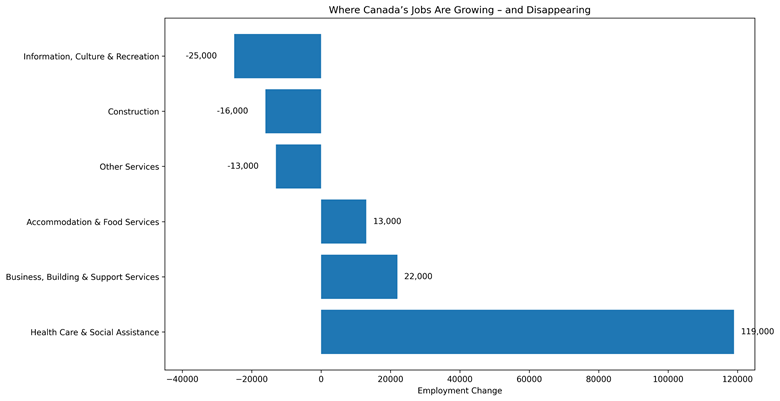
Healthcare and social assistance remained Canada’s strongest source of employment growth.
The sector added 119,000 jobs year over year in April, far outpacing most other industries.
The figures reinforce why healthcare occupations continue to feature prominently in Express Entry category-based selection draws and Provincial Nominee Program streams.
Canada continues to face shortages of nurses, healthcare aides, medical technologists, personal support workers, and other healthcare professionals.
The ongoing growth in healthcare hiring suggests immigration policy will likely continue prioritizing these occupations despite broader efforts to reduce temporary resident numbers.
Construction Employment Falls Despite Housing Push
One notable contradiction in the data involved construction employment.
Canada lost 16,000 construction jobs in April even as the federal government continues promoting large-scale housing construction initiatives and skilled trades immigration.
The figures highlight the complexity of Canada’s labour market.
While governments continue warning about long-term skilled trades shortages, higher borrowing costs and slower economic growth may be weighing on short-term hiring activity in construction.
At the same time, Ottawa continues to target skilled trades workers through category-based Express Entry draws and provincial immigration streams.
Youth Unemployment Remains Elevated
Youth unemployment remained one of the weakest areas of the labour market.
The unemployment rate for Canadians aged 15 to 24 rose to 14.3% in April.
Among students, unemployment reached 16%.
The figures remain well above pre-pandemic averages and reflect ongoing pressure in entry-level and service-sector employment.
The data may also intensify debate around temporary residents and labour market competition in lower-wage sectors, particularly in cities with large international student populations.
Quebec Labour Market Weakens Sharply
Quebec recorded some of the weakest labour market figures in the country.
Employment in the province fell by 43,000 in April, marking the second major monthly decline in three months.
Since January, Quebec has lost a net 91,000 jobs.
Much of the weakness was concentrated in Montreal, where the unemployment rate climbed to 7.7% — the city’s highest non-pandemic level since 2016.
Ontario, by contrast, added 42,000 jobs in April.
Wage Growth Still Remains Strong
Despite softer hiring conditions, wages continued to rise strongly.
Average hourly wages increased 4.5% year over year in April.
Statistics Canada said wage growth remained strongest among higher-paid workers.
The combination of rising unemployment and strong wage growth suggests Canada’s labour market remains uneven, with some sectors slowing while others continue facing worker shortages.
What This Means for Immigrants
The latest figures suggest Canada’s labour market is entering a more uncertain phase.
However, the data also reinforces that immigration policy is becoming increasingly targeted rather than simply reduced across the board.
Sectors such as healthcare and skilled trades continue to face shortages and remain important priorities within Canada’s immigration system.
At the same time, softer labour market conditions may continue influencing government decisions on temporary residents, international students, and lower-wage work permit programs.
For prospective immigrants, occupation and sector may become increasingly important factors in immigration success.
FAQ
Why did Canada’s unemployment rate rise in April 2026?
Canada’s unemployment rate rose to 6.9% because more people entered the labour market searching for work while overall employment remained largely unchanged. The increase reflects a softer labour market following several months of weaker employment growth and declining full-time positions.
Is Canada still experiencing labour shortages?
Yes. While overall job growth has slowed, several sectors continue facing worker shortages. Healthcare remains the strongest area of employment growth, and governments continue highlighting shortages in skilled trades and construction-related occupations.
How does this affect Canadian immigration policy?
The federal government is increasingly targeting immigration toward sectors with ongoing labour shortages. Healthcare workers and skilled trades professionals remain important priorities even as Canada reduces temporary resident levels and tightens some immigration programs.
Why is youth unemployment so high in Canada?
Youth unemployment reached 14.3% in April 2026 due to weaker hiring in entry-level and service-sector jobs. Student unemployment was even higher at 16%, reflecting growing competition for lower-wage and part-time employment opportunities.
Which provinces saw the biggest labour market changes?
Quebec recorded some of the weakest results, losing 43,000 jobs in April while Montreal’s unemployment rate climbed sharply. Ontario performed better, adding 42,000 jobs during the month.